Frame vs. Structural Damage: Decoding Carfax Damage Categories
Buying a used vehicle should feel exciting and not confusing. But many potential buyers start second-guessing their decision the moment they see terms like “Accident,” “Structure Damage,” or “Frame Damage” on a Carfax report.
That reaction is pretty normal, especially when you’re unfamiliar with what these labels actually mean. And it often leads to queries like, “What’s the real difference between frame and structural damage?” Or “Is it even safe to drive this car?”
Let’s find out!
Why the Distinction Matters for Value & Safety
The structural foundation of a vehicle is never about looks only. In fact, it also affects occupant safety and crash performance. Experts even believe that the car’s structure rating is highly linked to occupant death risk in crashes.
In a nutshell, structure always matters for survival and cannot be overlooked. Therefore, whenever a history report flags structural or frame damage, you should definitely investigate.
Frame Damage vs. Structural Damage: Differences to Know
Carfax and other vehicle history report platforms show title brands, rebuilt titles, salvage, insurance total-loss reports, and damage indicators (structure damage notes, airbag deployment, etc.)
But many people get confused about what "frame" and "structural damage" mean and what to do in this situation. Here’s how they differ:
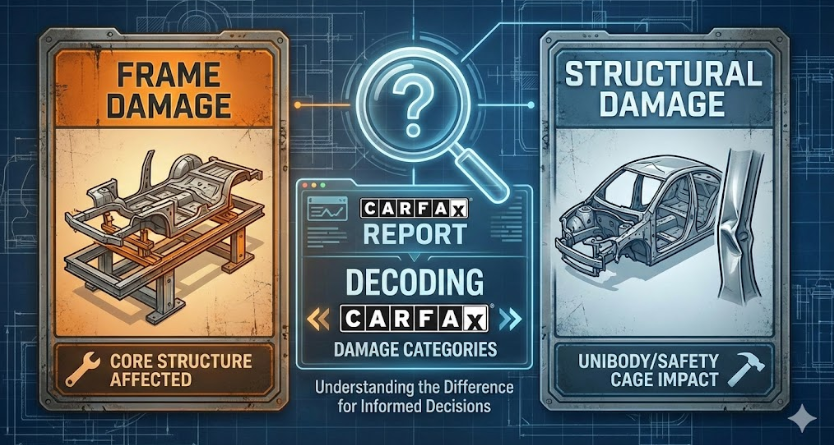
Frame Damage
**Definition: **It means the vehicle’s frame (for body-on-frame vehicles) or unibody rails or supports (for unibody cars) were cracked, misaligned, or bent.
Normal Causes: This flag can show up due to reasons like severe underbody hits, hitting fixed objects, or high-impact collisions (side or front).
Consequences: Uneven tire wear, poor wheel alignment, unsafe crash energy management, or compromised crumple zones.
Structural Damage
Definition: It includes the damage to load-bearing parts of the vehicle beyond the visible panels, such as suspension mounts, subframes, strut towers, etc.
Normal Causes: This damage can be subtler than obvious “frame” bending. Some reasons can be the torso of the car shifted, the rails buckled, and the mounting points changed.
Note: Both these terms are used interchangeably in reports, but even the slightest difference when we’re assessing safety and repairability.
How Does Vehicle Damage Affect Resale Value?
When a vehicle is involved in an accident, its value decreases, even after repairs. When private buyers or dealerships review the car’s background, they mostly consider the quality of repairs, the severity of damage, and whether there was any airbag deployment or frame damage.