How to Interpret the Details in a Carfax Report for Used Car Buying?
Before buying a used vehicle, it’s very usual to have that feeling: “Will I get exactly what I’m expecting?” and “What if the seller is hiding something?” After all, it’s a big decision and requires a huge investment from your end.
That’s why many people consider Carfax reports and rely on its information before making a purchase. But the thing is, even if you download the report, you may not fully understand it if you’re unaware of the basics.
Today, we’ll show you how to interpret the details in a Carfax report for used-car buying. Keep scrolling!
An Overview of the Carfax Report
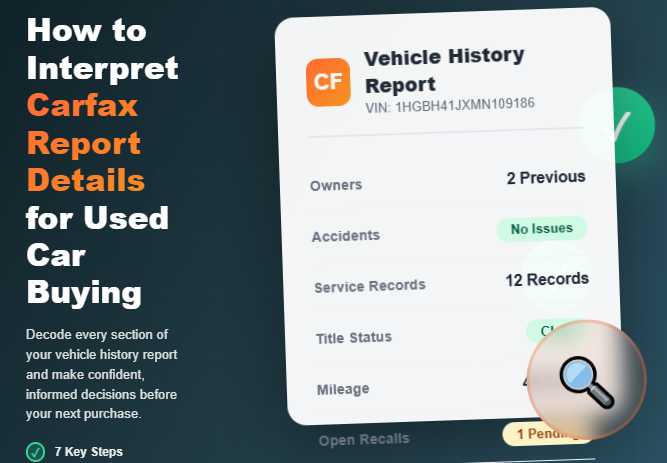
A Carfax report is a detailed vehicle history report that gathers information from reliable sources about a vehicle’s entire history. It’s designed to help both sellers and buyers understand the vehicle's background to make the right decision. Especially when it comes to damage, mileage accuracy, recall information, registration history, and accidental data, this report really helps.
7 Steps to Interpret a Carfax Vehicle History Report Efficiently
A vehicle report is considered very helpful while buying a used car. Let’s see how you can read your report the right way:
Step #1. Check the Vehicle Overview
The very first thing you should see is the basic information of the car, including:
-Year and model
-Body style
-Fuel type
-Engine type
This section will help you verify that the car matches exactly what you’re looking for and what the seller’s description shows. And if it doesn’t match what the seller said, that’s a red flag.
Step #2. Look at the Ownership History
Carfax reports from reliable platforms, like CheapVHR, also mention how many owners the car has had and how long every owner kept it.
Here’s what you should prefer: -The less the owner's history, the better
-Personal-use cars over commercial ones
-Shorter ownership periods
This information will help you predict potential future issues and evaluate how the car was treated in the past.
Step #3. Analyze the Mileage Records
Another essential thing to look into in a Carfax report is mileage records, as Carfax tracks mileage from registrations, service visits, failed safety inspections, and emissions tests.
So, look for steady mileage progression, and see if there are any sudden drops or repeated numbers. And if the mileage looks questionable, you should request service records.
Otherwise, it’s better to have a mechanic check for possible wear-and-tear signs that don't match the mileage the seller reported.
Step #4. See the Accident & Damage History
Now, it’s time to assess the damage and the vehicle's accident history. Remember that not all accidents are equal, and a reliable Carfax report can help you assess their severity.