Do EVs Lose Value Faster? Carfax Resale Value Comparison Guide
Electric vehicles are reshaping the automotive market, but there's a catch most buyers overlook until it's too late: resale value. An EV resale value comparison against traditional gas-powered vehicles reveals a complicated picture, one where the numbers have been shifting rapidly as the market matures.
For years, EV depreciation vs ICE (internal combustion engine) vehicles told a clear story: EVs lost value faster. Research from George Washington University confirms EVs have historically depreciated at steeper rates, though that trend is beginning to change. The vehicle you buy today may be worth significantly less tomorrow, and understanding why is the smartest financial move any buyer can make.
Factors Influencing EV Depreciation Rates
The gap between EV and gas car resale values isn't random. It's driven by identifiable forces that every buyer should understand before signing anything.
-
Battery technology is the biggest one. Range anxiety is real, and older battery packs with degraded capacity make used EVs a harder sell.
-
Federal tax credits create an unusual dynamic. When buyers can get $7,500 off a new EV, demand for used models softens, pulling down resale prices.
-
Charging infrastructure in your local market plays a bigger role than most people expect. An EV loses value faster in areas with limited public charging than in EV-friendly markets like California or the Pacific Northwest.
-
Brand reputation for software support and over-the-air updates directly influences how well a model holds its value over time.
-
Trim level and range rating at the time of original sale also factor in, with longer-range, better-equipped models depreciating more slowly.
EV vs. Gas Cars: A 5-Year Depreciation Analysis
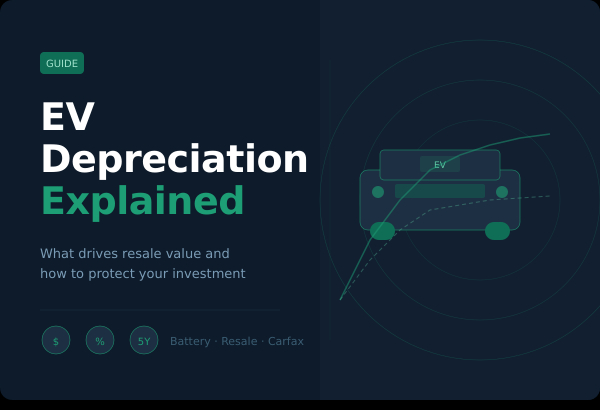
Over a five-year period, EVs have historically lost more value than comparable gas-powered vehicles, but that gap is narrowing. According to EV Lectron's market breakdown, some electric vehicles lose up to 49% of their value within five years, while the average gas car depreciates roughly 40 to 50% over the same window.
Here's the typical trajectory: years one and two see the steepest depreciation, often 20 to 30%. Years three and four bring a slowdown as prices stabilize. By year five, residual value is heavily tied to battery health.
| Factor | Electric Vehicles |
|---|